
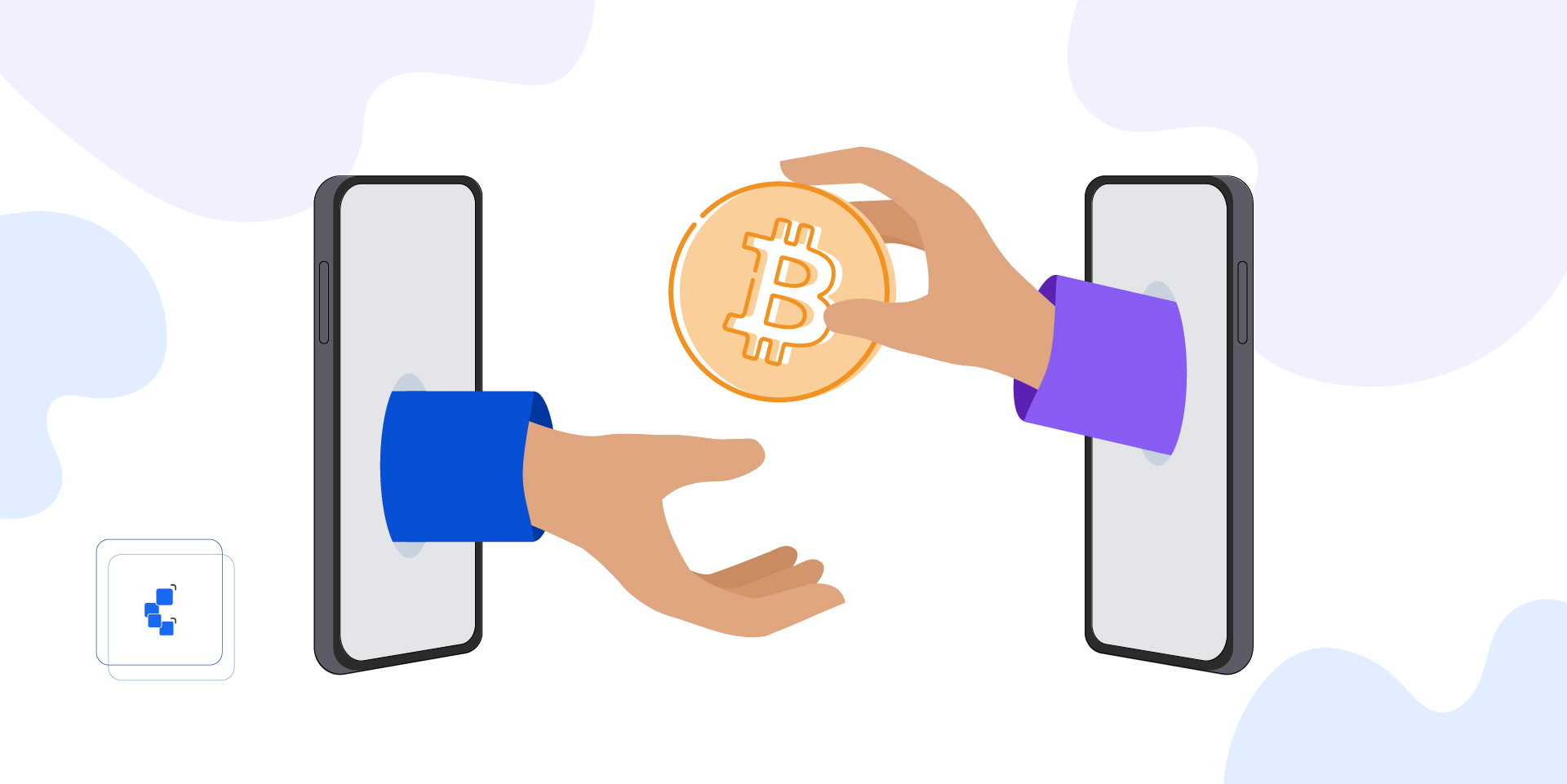
Discover why transparency in crypto transactions matters for everyone. Explained simply, without jargon, with clear examples anyone can understand.
Imagine being able to see, in real time, every money movement happening in a financial system. Not just yours, but everyone's. Every dollar, every euro, every peso that comes and goes, recorded in a giant ledger that no one can erase or alter. That, in essence, is what blockchain technology behind cryptocurrencies offers. And while it sounds technical, understanding why it matters is simpler than it seems.
First, the Basics: What Is a Crypto Transaction?
A crypto transaction is simply the transfer of digital value from one person to another, without a bank in the middle. If you've ever made a bank transfer, you already know the concept. The difference lies in how it's recorded.
In the traditional system, your bank keeps a private record of your money. You trust that record is correct, but you can't see or verify it yourself. In the crypto world, that record is public: it's called a blockchain, and it works as a shared ledger maintained by thousands of computers around the world.
Transparency Doesn't Mean Everyone Sees Your Name
Here's where the most common confusion arises. When we say cryptocurrencies are transparent, we don't mean anyone can see that "John Smith sent $100 to Mary Johnson." What's visible are addresses: long strings of letters and numbers, something like 1A2b3C4d5E.... Those addresses work like account numbers.
Anyone can check how much money is in an address and what movements it has had. But knowing who's behind that address requires additional information. It's like frosted glass: you see movement, but you don't always see the face of the person making it.
That's the big difference from the banking system: banks know exactly who you are, but the public can't audit what they do. On blockchain, the opposite happens: the public can audit everything, even if it doesn't always know who's who.
Why Does This Matter?
1. It Makes Money Laundering and Corruption Harder When records are public, hiding large money movements becomes much more difficult. Investigators, journalists, and authorities can trace suspicious funds. In fact, many financial crime investigations today start by following the crypto trail, precisely because that trail is permanently recorded.
2. It Lets You Audit Without Trusting Anyone's Word In the traditional system, we trust banks and audits to tell us the truth. On blockchain, anyone with technical knowledge can verify for themselves that the money exists and moves as claimed. You don't have to believe: you can check.
3. It Empowers the Everyday User If you can see the flow of money, you can make better decisions. You can know whether a platform really holds the funds it claims to hold, or whether a project is serious or just a facade. Transparency reduces information asymmetry, that phenomenon where a few know a lot and the rest know little.
4. It Builds Trust in a System That Looks Chaotic at First Glance It may sound contradictory: a system with no central banks or governments backing it seems chaotic. But precisely because everything is recorded and verifiable, trust doesn't depend on an authority. It depends on mathematics and the community that maintains the network.
The Limits of Transparency
It would be naive to say crypto transparency solves every problem. It has its nuances:
Privacy vs. transparency: Some cryptocurrencies focus on anonymity (like Monero or Zcash), prioritizing privacy over full transparency. It's an open and legitimate debate.
Reused addresses: If an address becomes publicly linked to a person, all their movements are exposed. That can be a privacy risk.
Technical complexity: Seeing data isn't the same as understanding it. Most people need tools and education to interpret that information.
What Does This Mean for You, Even If You Don't Use Crypto?
Even if you never buy a cryptocurrency, transparency in transactions is already changing the financial world:
Banks are exploring similar technologies for their own records.
Governments are debating how to regulate these systems without losing their advantages.
Companies use blockchain to prove their supply chains are honest (for example, knowing where your coffee really comes from).
In other words: crypto transparency isn't just a topic for "tech people." It's a conversation about how we want money to work in the future, and about how much power citizens should have to verify what those managing our resources are doing.
Conclusion
Transparency in crypto transactions is, at its core, a simple and powerful idea: that anyone can see and verify how money moves, without relying on the word of a few. It's not perfect, it has challenges, and it doesn't solve every problem in the financial world. But it represents a paradigm shift: moving from blind trust to verifiable proof.
And in a world where misinformation and financial opacity are real problems, that ability to verify isn't a technical detail. It's a tool of citizenship.