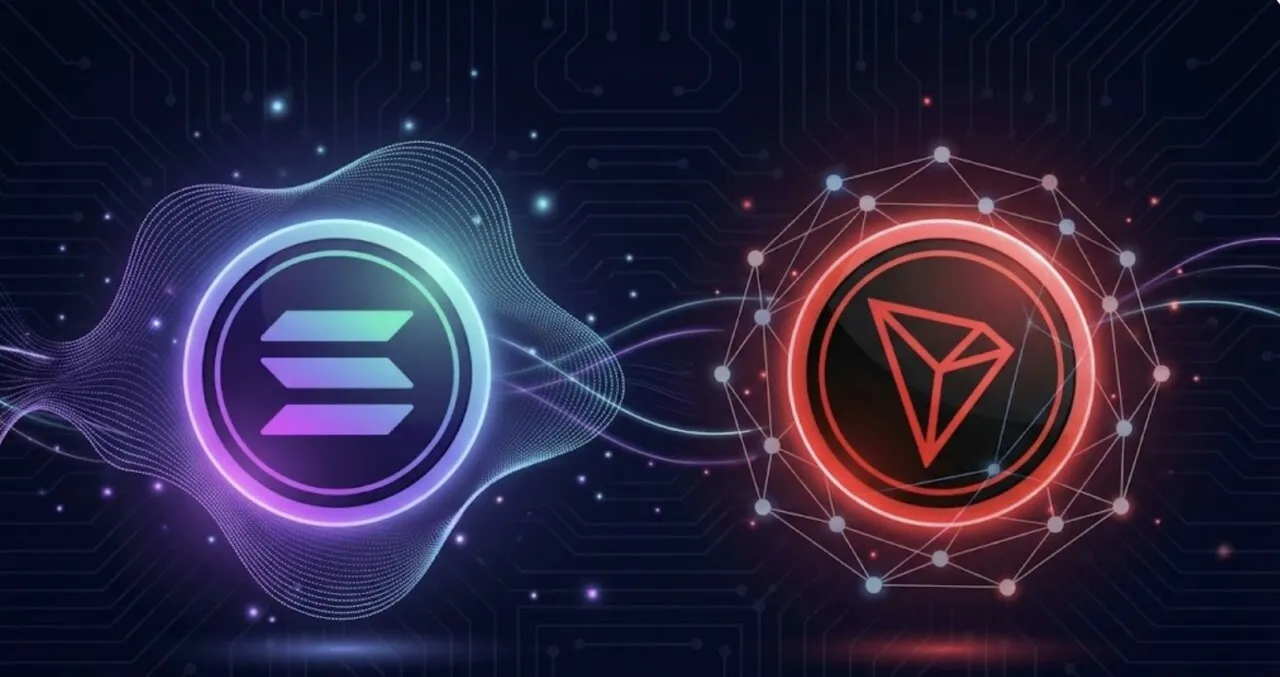
Why Tron and Solana beat banks for small transfers: near-zero fees, seconds to settle, explained simply for everyone.
If you've ever sent money across borders, you probably know the pain: the amount is small, but the fee eats a huge chunk of it. A bank wire can cost $25 to $45. That means sending $100 could lose a third of its value before it even arrives.
This is exactly why Tron and Solana have become so important. They make sending small amounts of money cheap, fast, and predictable.
The Problem With Traditional Transfers: Small Amounts Get Hit Hardest
Traditional finance works better for large transfers. Whether you send $10,000 or $100, the bank's back-end processing cost is roughly the same. But when fees are charged proportionally, small senders end up paying far more per dollar.
Cross-border remittances are the worst case. According to 2026 data, a $1,000 USDT transfer on Tron costs about $0.30 in fees, while a bank wire costs $25 to $45. That's a difference of over 100x.
Small transfers need a different approach entirely: push the per-transaction cost down to almost nothing.
Solana: The Cheapest Transfer Network
If your priority is rock-bottom cost, Solana is currently the cheapest among major chains.
A standard transfer on Solana costs roughly $0.00025 to $0.0025. That means sending $1 might cost you a fraction of a cent. Data shows Solana processed 5.2 billion non-vote transactions in August 2026, with a median fee of just $0.00046.
Speed is equally impressive. Solana's block time is about 400 milliseconds, with transactions typically confirming in 5 to 30 seconds. In real-world enterprise payment data, Solana recorded the fastest average settlement time: 1 minute 45 seconds.
Solana also has a fee stability advantage. On most blockchains, fees spike when the network gets congested. But Solana's fee market is "local": congestion on one popular token only affects related accounts, not the entire network's transfer costs. That means when you send a small amount, you don't have to worry about suddenly getting hit with a high fee.
Tron: The Most Widely Accepted Transfer Network
Tron's fees are slightly higher than Solana's, but it wins on another dimension: acceptance.
Tron currently carries roughly 47% to 50% of the global USDT supply, making it the largest single-chain USDT deployment. That means the vast majority of exchanges and payment platforms support Tron-based USDT (TRC-20) by default. If you're sending money to a friend or merchant, they can almost certainly receive it.
On cost, Tron's typical TRC-20 transfer runs between $0.09 and $1, with an average transaction fee of about $0.65. That's far higher than Solana, but still a world away from Ethereum mainnet fees of $2 to $25 or more.
Tron's real killer feature is predictability. Tron's fees don't swing wildly with network congestion, and users can stake TRX to earn "Energy" resources, bringing transfer costs down to near zero. For frequent senders, that's a powerful cost-control tool.
On speed, Tron's confirmation time is typically 3 to 10 seconds, slightly faster than Solana's typical confirmation.
The Gap at a Glance
Network Typical Transfer Fee Confirmation Speed Core Advantage Solana ~$0.0003–$0.0025 5–30 seconds Ultra-low cost, stable fees Tron ~$0.09–$1 3–10 seconds Widest acceptance, predictable fees Ethereum Mainnet $2–$25+ 1–5 minutes Highest security, but expensive
How to Choose
Which chain you pick depends on your specific situation.
If cost is your top priority and the recipient supports Solana, go with Solana. Its fees are almost negligible, making it ideal for high-frequency, small transfers.
If you're unsure what the recipient supports, or you need maximum compatibility, Tron is the safer choice. The vast majority of exchanges and wallets support TRC-20 USDT.
If you transfer often, consider staking TRX on Tron to earn Energy, which can bring your effective cost per transfer close to zero.
Things to Watch Out For
Whichever chain you choose, always confirm the recipient address and network match before sending. Sending USDT on Tron to an Ethereum address, or vice versa, can result in permanent loss of funds.
Also, USDT on both Tron and Solana retains a freeze function. That means in specific cases, the issuer can freeze funds at certain addresses at the request of law enforcement. This is an inherent feature of centralized stablecoins, not of the blockchains themselves.
The Bottom Line
For small transactions, Tron and Solana aren't just cheaper than banks. They're cheaper by orders of magnitude. Solana wins on pure cost. Tron wins on acceptance and predictability. Either way, both have made sending small amounts of money faster and more affordable than the traditional financial system ever could.